Kremlin Greenlights Three-Way Ukraine Peace Talks for Mid-November
Russia has agreed to restart negotiations with the U.S. and Ukraine, marking a pivotal diplomatic shift following high-level meetings in St. Petersburg and Oslo.
By Sofia Ramirez ·
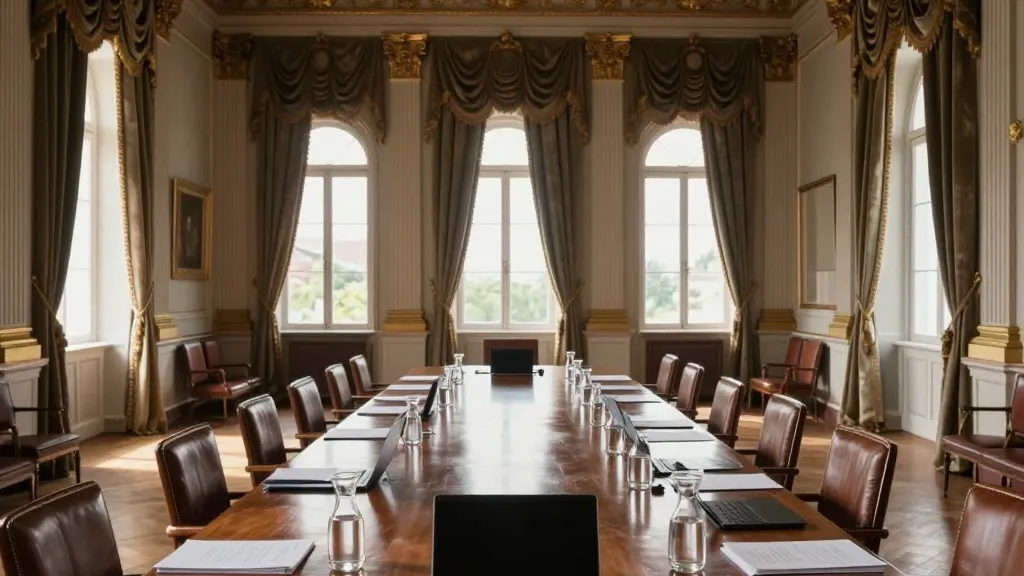
Russia has officially agreed to resume three-way peace negotiations with the United States and Ukraine, a move that could lead to the first such direct talks since February. Kremlin foreign affairs adviser Yuri Ushakov confirmed Wednesday that President Vladimir Putin approved the restart of these discussions in principle, targeting a date on or after November 10. This development represents a significant step in the U.S.-led effort to end the conflict, which has now entered its fifth year.
The agreement came after a three-hour meeting in St. Petersburg between Putin and U.S. envoy Steve Witkoff. Ushakov stated that the primary focus of the upcoming talks will be constructing a security framework for both nations once the conflict concludes. The session included Russian presidential envoy Kirill Dmitriev and U.S. President Donald Trump’s son-in-law, Jared Kushner, who joined via video link. Witkoff and Kushner reportedly proposed the technical-level three-way meeting and shared updates from their discussions with Ukrainian President Volodymyr Zelenskyy the previous day in Oslo.
President Zelenskyy voiced his support for the swift resumption of talks in an audio message released late Wednesday. He described the agenda as clear: ending the war, bringing peace closer, and preparing for a potential meeting at the leaders’ level. However, he noted with some skepticism that while Russia has frequently expressed readiness to meet, previous opportunities were canceled, leaving the outcome uncertain. Shortly after his statement, missile alerts were triggered over Kyiv, accompanied by loud explosions in the capital.
Despite the progress, the Kremlin expressed reservations about the proposals that emerged from recent multilateral talks in Oslo. Ushakov characterized the Oslo outcomes as containing little of real value for resolving the crisis, though he later softened his stance on state television, calling them a step in the right direction even if not fully satisfactory to Moscow. This assessment contrasts with the optimism displayed by other leaders who seek to inject new momentum into the peace process after a period of stalled efforts by the Trump administration.
In parallel diplomatic moves, Putin indicated he is open to restoring economic ties with the United States and is prepared to discuss the U.S.-led conflict in Iran. Ushakov highlighted that large-scale joint economic projects with significant cooperation prospects were discussed in detail with Witkoff, with some nearing the implementation stage. The two leaders also explored the possibility of a trilateral meeting involving the U.S., Russia, and China at an economic summit in China next month, a gathering Beijing is already preparing for.
U.S. President Donald Trump has intensified pressure on Kyiv to reach a deal, expressing frustration with the lack of tangible returns on American investment. Speaking at the White House on Tuesday, Trump stated that the U.S. wants Zelenskyy to make a deal, citing grief, death, and monetary loss as the primary outcomes so far. He warned that failing to reach an agreement would lead to a very bad situation, reflecting the soured relationship between the two leaders. Meanwhile, Zelenskyy noted that Kyiv is once again receiving early warnings from partners about incoming Russian missiles, a critical shift after recent strikes that lacked sufficient notice.
On the battlefield, Russian attacks overnight resulted in significant casualties and infrastructure damage. Three people were killed and 12 wounded in Kyiv, with ten residential buildings damaged. In the eastern city of Kharkiv, two people died and 11 were wounded in a drone strike on a residential area. Ukrainian Prime Minister Serhii Koretskyi reported that energy facilities in four cities were targeted. The Russian Defense Ministry claimed its forces struck a warehouse, an electrical substation, and a bulk carrier headed to Odesa, while also intercepting 373 Ukrainian drones over various Russian regions and the Crimean Peninsula.
Norwegian Prime Minister Jonas Gahr Støre, who met with Witkoff in Oslo after his Russia visit, suggested that a new diplomatic phase may have begun. He indicated that the new talks are likely to occur in mid-November and offered a nuanced view on border issues, stating that while Ukraine may not formally accept the current front line as a permanent border, it may eventually be a reality it must live with. The diplomatic activity coincided with Russia’s release of retired American teacher Stephen Hubbard, who had been imprisoned on mercenary charges, a move Witkoff described as a goodwill gesture following Trump’s request to Putin.
The diplomatic push follows a series of earlier negotiations in Abu Dhabi and Geneva, which yielded limited progress beyond prisoner exchanges. With the war continuing and economic ties potentially thawing, the coming weeks will test whether these high-level agreements can translate into a sustainable ceasefire or a formal end to hostilities. The international community remains closely watchful as preparations for the mid-November talks accelerate.
Source: Atlanta News First