Nvidia’s Microduck Robots Become Instant Holiday Phenomenon
Following a viral demonstration at GTC Berlin, preorders for the cute, open-source robots have surged past 20,000 units, positioning them as a top contender for the best-selling toy of the year.
By Wei Zhang ·
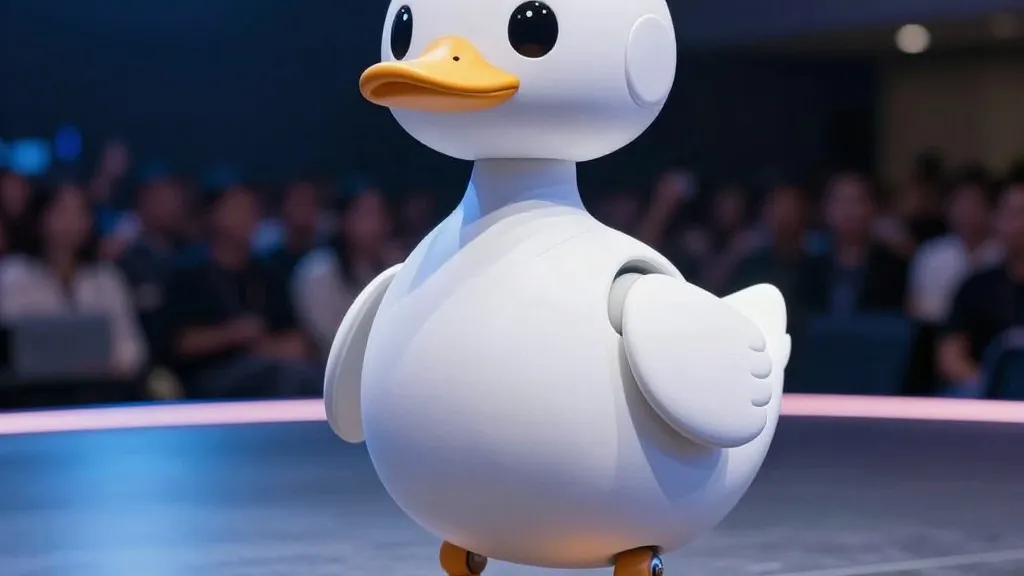
Twenty thousand. That is the number of preorders secured for a waddling, robotic duck in less than 24 hours. The surge in demand was triggered by a clip that spread rapidly across social media earlier this week, featuring Nvidia Chief Executive Officer Jensen Huang interacting with a flock of these small devices during his keynote address at the GTC Berlin conference.
In the footage, the Microducks are seen performing a variety of charming actions. They stomp their tiny feet, emit soft sounds reminiscent of the droid R2-D2, and respond to voice commands by sitting, lying down for a simulated nap, or executing somersaults. The immediate reaction from the online community was overwhelmingly positive, driven largely by the robots' adorable appearance and synchronized movements.
The rapid uptake in orders was confirmed by Clem Delangue, a key figure at Hugging Face, who shared the milestone on Twitter. Given the timing, these devices are scheduled for delivery before the Christmas holiday season. This timeline suggests that the Microducks are already establishing themselves as a major player in the competitive gift market for 2026.
Delangue believes the Microducks could finish as the year’s top-selling robot. Notably, he suggests the primary audience may not be children. Promotional material released by the developers highlights adults engaging with the robots, indicating a broad appeal that extends beyond the traditional toy demographic.
The Microducks are open-source devices created by Pollen Robotics. The company was acquired by Hugging Face in 2025, and subsequently, Nvidia purchased Hugging Face in September of this year. Through this chain of acquisitions, the Microducks are now technically an Nvidia product, integrating another consumer-facing hardware item into the GPU giant’s expanding portfolio.
This is not Hugging Face’s first foray into consumer robotics. The company previously released the Reachy Mini, another compact and visually appealing robot. The success of the Microducks appears to build upon the momentum generated by that earlier release, further cementing the brand’s presence in the personal robotics space.
Under the hood, the robots utilize Nvidia’s technology stack for their development. Simulations of the Microducks were used to teach them basic behaviors, such as walking, sitting, and standing, which are included in their factory settings. This simulation-to-reality training process is a core part of Nvidia’s approach to robotics development.
Pollen Robotics has emphasized the community aspect of the product. Owners are encouraged to train their individual units with new tricks and then share those custom behaviors with the wider user base. This collaborative element adds a layer of interactivity beyond the standard features, potentially extending the product’s lifespan through user-generated content.
The release of the Microducks arrives at a moment of mixed sentiment for the AI industry. Earlier this week, the sector faced significant scrutiny as AI involvement was cited as a factor in a series of cyberattacks. This led to a period of concern regarding the technology’s impact on global security.
Against that backdrop of anxiety, the viral success of the Microducks offers a different perspective. The devices demonstrate that AI and robotics can also be sources of joy and engagement. For many observers, the video of Huang playing with the ducks served as a welcome break from the heavier news cycle, reinforcing the idea that the technology can be both powerful and playful.
Source: TechCrunch