Tesla’s self-driving promise gets a new date and a smaller map
The company says owner cars can drive unsupervised in 2027, but only within specific Robotaxi areas.
By Ahmed Mansour ·
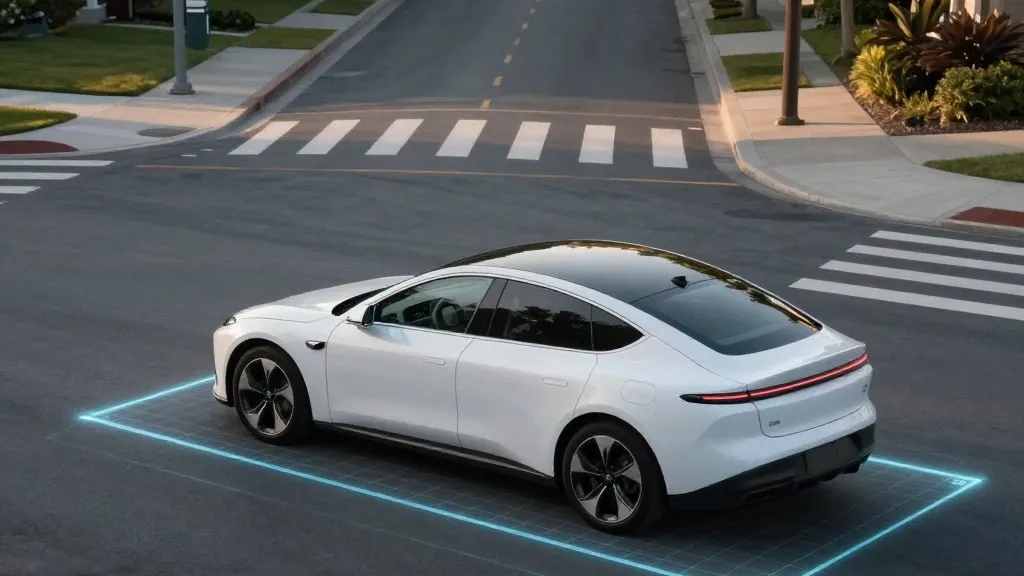
Tesla has set a new target for unsupervised self-driving in customer vehicles: the second quarter of 2027. This date was announced during the company’s earnings call on Tuesday. It is the latest timeline offered for a feature that has been promised for nearly ten years. However, the scope of the feature is narrower than many buyers expected.
Ashok Elluswamy, Tesla’s head of AI, explained the details on the call. He described the plan not as a general software update that allows cars to drive anywhere. Instead, owners will be able to add their personal vehicles to Tesla’s managed Robotaxi fleet. This means the car will only drive itself without supervision inside areas where the Robotaxi service already operates.
This limitation is significant. Tesla’s Robotaxi service currently runs in six US metropolitan areas. The service zones are small geofences that cover specific parts of cities like Miami, Orlando, and Tampa. In these areas, the cars stick to low-speed routes and avoid highways. In the Bay Area, the cars are not unsupervised at all because California regulations still require a safety driver.
The current fleet size is modest. Tesla reported that its Robotaxi system reached nearly two million cumulative unsupervised miles by the end of the third quarter. This figure includes the Cybercab, which joined the Austin fleet recently. Third-party trackers observed only dozens of fully driverless Teslas on the road this spring. This number is far below the hundreds of thousands of vehicles Elon Musk has previously discussed.
The shift in strategy contrasts with past marketing. For years, Tesla told FSD buyers that their cars would eventually drive themselves anywhere via a software update. In July 2025, Musk told investors that unsupervised personal use would be available in certain geographies by the end of that year. A year earlier, he suggested he would be surprised if the technology was not ready the following year.
Some owners face additional hurdles. Vehicles equipped with the older Hardware 3 computer have been told they cannot run unsupervised FSD at all. There is no clear upgrade plan for these cars. Now, the focus is on Q2 2027, where the product is defined by Tesla’s specific fleet and zones rather than general capability.
Elluswamy stated that safety remains the main bottleneck for expansion. This is why the service is currently limited to low-speed roads and simpler environments. He believes these safety issues will be resolved by next year, though he acknowledged uncertainty. The company is waiting for more data to expand the service areas.
Shareholders asked directly when this feature would arrive in their own cars. The question, backed by about 1.1 million shares, was among the top inquiries for the call. The answer confirmed the Q2 2027 timeline. For now, the promise is that your car can work as a Robotaxi inside a small, controlled geofence, rather than driving you to any destination you choose.
Source: Electrek